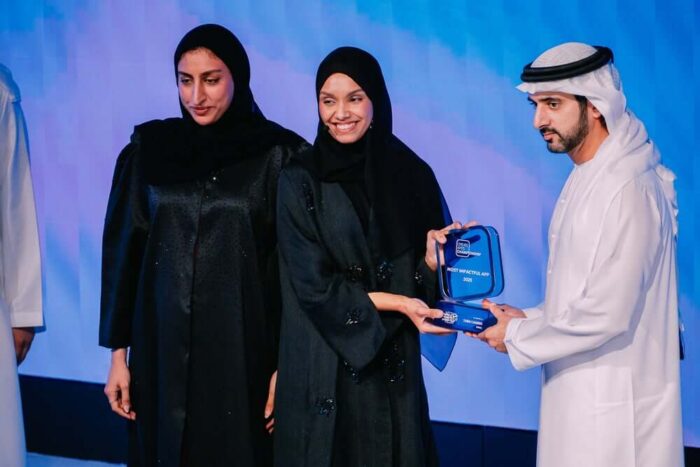
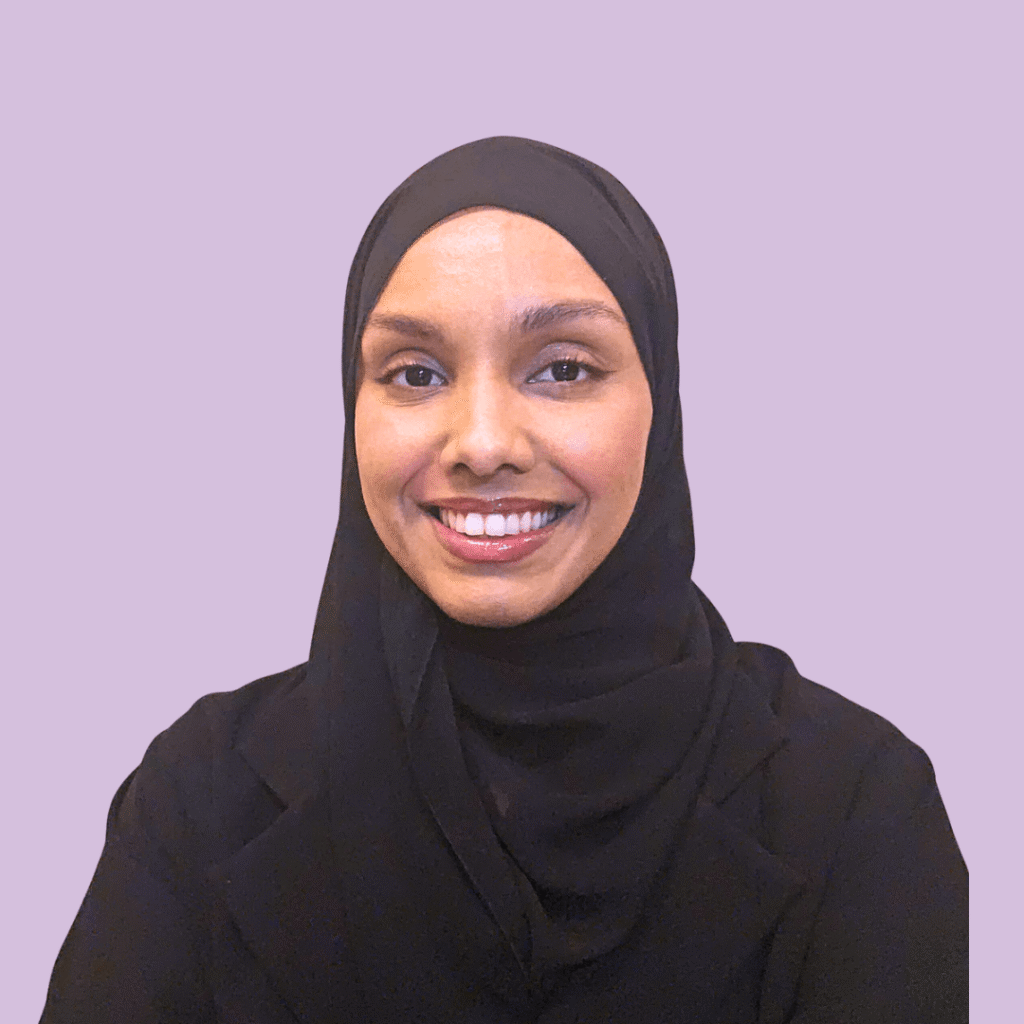
In the heart of the Gulf, where ambition meets tradition, Mariam Almarri is doing something amazing. As the co-founder of BOOM, a purpose-driven and award-winning courier platform, Mariam is not only disrupting the logistics space with smart technology – she’s making it more inclusive, accessible, and human.
With her roots in education, a degree in quality assurance, and a passion for innovation, Mariam is that kind of founder who doesn’t just build a business – she builds a bridge. A bridge between cities, between freelancers and customers, and between dreams and opportunities.
BOOM is a delivery app – but it’s also a movement. One that helps unemployed youth, champions home-based women entrepreneurs, and reimagines the freelance economy in the UAE. This is innovation with empathy, powered by friendship, and led by women who dare to say: “We can do it differently.”
From Small Business Needs to Tech Innovation: The Birth of BOOM
-Mariam, can you tell us what inspired the idea for BOOM, and how you and your co-founder transformed a simple business need into a fully functioning digital platform?
– I graduated with a degree in quality assurance and now work in the Ministry of Education’s inspection department. My co-founder, Mariam Alnuaimi, and I have been best friends since college—we studied the same field, though she now works in future foresight at Abu Dhabi Police.
The idea for BOOM started about two years ago when she was going to launch a small home-based cookie business. She struggled to find affordable couriers to deliver her products outside Al Ain. Around the same time, I had just studied user experience and suggested we build an app to solve this issue – not just for her, but for others facing the same challenge.
We envisioned a platform where anyone with a license and a car could earn money delivering items – and no CV or prior experience needed. It could help unemployed youth while also supporting women with home businesses. So we worked on the idea together and we promised each other that whatever happens, we will have to make this happen.
Freelance courier work wasn’t common here. The market was dominated by companies with fixed pricing and rigid structures. So we developed the idea, ran surveys, built prototypes, and gathered feedback. By chance, we came across the Create Apps Championship in Dubai and applied.
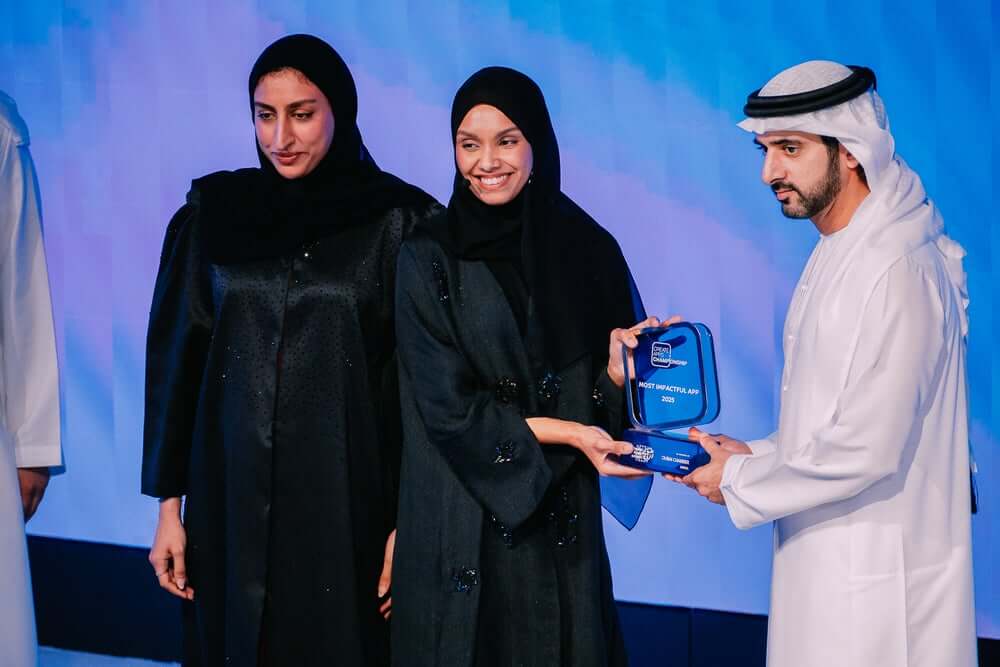
We made it to the semifinals and kept refining the idea. It was a learning curve – especially explaining how this platform could be open to anyone, both couriers and customers. But with the right support and mentorship, we won Dubai’s App of the Year and Most Impactful App.
Since then, we’ve focused on turning the idea into reality. After months of development, BOOM officially launched in late September. We’re still at the beginning- but we’re here, Alhamdulillah.
Gaining Visibility and Credibility: The Role of the Create Apps Championship
– Alhamdulillah. So how did the Create Apps Championship influence BOOM’s early development, credibility, and future vision? Do you think it has an impact on your work now?
– Yes, I think the Create Apps Championship is designed to connect you with the right people—those who truly understand business and what it takes to build something, even in the logistics world. They gave us visibility and access we wouldn’t have had on our own. It would’ve been hard to reach major players or get advice from CEOs without this opportunity.
What helped the most was how they challenged our idea. They didn’t just praise it – they pointed out the gaps and pushed us to improve. That kind of honest feedback is rare. Friends and family usually tell you it’s great, but this process showed us what we needed to fix. And that made all the difference.
Female Founders & Friendship: A Stronger Foundation
– You built BOOM with a close friend. How has this partnership shaped your entrepreneurial journey, and what has working together meant to you?
-It really elevated the experience for me. If I had partnered with a stranger, I might have had concerns. There’s this stereotype that you shouldn’t start a business with a friend—it might hurt the friendship. But I always ask, what if it makes the work better?
Mariam and I know each other’s strengths and weaknesses. We support each other, divide tasks, and work from different angles. So having that loyalty and having those years of friendship, it makes the working with her honestly feel a lot more relaxed.
If she’s tired, I step in. If I’m tired, she does. We work hand in hand. For us, it’s not the business affecting the friendship – it’s the friendship empowering the business.
So, I want to shift that negative narrative. I’ve seen many friends build businesses and stay friends. It’s possible. And when there’s trust, it can make the partnership even stronger.
Balancing Roles: Full-Time Work Meets Full-Time Passion
– You’re working at the Ministry of Education while developing a tech startup. How do you navigate these roles, and has it been more of a challenge or a motivation?
– Of course, it’s challenging, but it depends on how you view a challenge. Do you see an opportunity, or do you feel afraid and back away? It really depends on your personality and perspective.
For me, it taught me a few important things. If you truly want to start something – if you want to be an entrepreneur and build a product – you have to go after it, no matter what. Having a job is not an excuse. I see so many men starting side businesses while being employed, and no one asks them how they manage it. But women are always questioned, as if it’s too risky for us to divide our time between a job, a family, or a business.
It taught me that if I really want something, I’ll go for it. I do have a full-time job, but I can still do it. If I say I can’t, it means I’m either afraid or don’t want it enough.
I’ve learned so much about time management – it’s a skill and an art. I need to know how to prioritize. Sometimes, family is the most important thing, and I give them my full attention. When I’m at work, I give 100% to my inspections. I can’t think about anything else. So I structure my time in blocks: this is for work, this is for BOOM, this is for family.
You also realize that you can’t do everything alone. There’s this illusion that you can handle it all, and then reality hits. You need someone to take over certain parts, to guide you, or just to say, “I’ve got this.”
It’s important to be humble – to know when to delegate, when to pause, and when to rest. Your body and mind will tell you when you’re overwhelmed. You just have to listen. In the end, when you’re clear about your goal, it’s achievable. You just have to navigate wisely and know what to prioritize.
I think we often ask women how they manage family, because family is seen as their first priority. But men have families too—and no one asks them the same question. So yes, my family supports me, and that support means a lot.
– What does it mean for you, this support that you get from your family?
– It means a lot. I often ask myself – who am I doing this for? Am I doing it for myself, for my community, or just to be seen or talked about? When my sister became the first to use the app, our very first customer, she said, “I used it—and it worked.” I felt so glad. In that moment, I thought, okay, my work is done. It’s an amazing feeling to see people benefit from what you’ve built—whether it’s a program, a platform, or even just an idea that turned into something useful. It’s helping someone. It’s doing what we hoped it would do. That’s enough validation for me. I feel proud of the hours we’ve put in, the work we’ve done—and when it’s my family or friends who say it, it makes me even happier, even more proud.
Breaking Stereotypes: Women in Tech, Innovation & the MENA Region
– I’m really glad you shared your experience of having a full-time job while building a startup. Many entrepreneurs face this, but it’s not often openly discussed. When you’re just starting out, time can be your most valuable investment. On the other hand, you definitely need a sense of safety—a financial cushion, some stability. That’s why many of us keep full-time jobs for a while. I know women entrepreneurs in other countries who’ve said, “I don’t feel safe leaving my job just yet.”
-Yes, exactly. I felt the same. I couldn’t just leave everything behind and take the risk – it felt like a gamble. So I asked myself: how can I balance both? How can I hold onto that feeling of security? Entrepreneurship is a step-by-step journey. We don’t just appear in the news one day – it takes hard work.
And sometimes your background helps. Your workplace, your colleagues—they can support and inspire you. You also carry those skills into your business. I’ve seen women in my own family take that chance—starting something from scratch with no backup plan, no other income. And it worked out for them, Alhamdulillah. Those are the people I look up to—the risk-takers who believe in what they’re building, even when it’s scary.
– Have you experienced any assumptions or expectations as a woman innovating in tech in the Gulf? How do you see the landscape for women in the MENA region, and does being a woman entrepreneur there make a difference?
-It does make a difference. There’s a stereotype that people try to put you in a box – you’re a mother, an employee, that’s it. I’ve even had people tell me directly, “But you’re already employed, why are you doing this too?” Like Oscar Wilde said, to define is to limit. I don’t want to be limited, and no one should be.
We can be many things at once. My co-founder, Mariam is a wonderful mother, an employee, and an entrepreneur. She doesn’t fit into one box – and neither do I. People often try to label you: “You’re an employee,” and when I say no, they ask, “Then what are you?” The answer is: I’m many things, and that can change.
I’ve seen this mindset shifting. More women in tech are stepping up, and what I notice most is how detail-oriented they are. Especially during the pitching phase of the championship – it was clear that women often build businesses to solve very specific, everyday problems. They aren’t always chasing big profits – they’re solving something real, something human.
That attention to detail is powerful. Even if the problem seems small, it’s meaningful to someone. And that’s what matters: creating solutions that make life easier, safer, more comfortable. I love seeing more women choosing to be the ones who step up and say, “I’ll solve that problem,” even if it’s not the most profitable – because it helps someone, and that’s enough.
And also women are, you know, in the family, the ones who are taking care of so many things at once. So maybe that helps also that we can see maybe different business cases than men, and it’s okay. You can often tell when something was designed by a woman – the attention to detail really stands out. I don’t want to stereotype; I know men who are very detail-oriented too. But in the tech world, I’ve noticed many women are choosing to build apps, businesses, or programs that focus on solving one specific issue, rather than trying to cover everything at once.
Maybe it comes down to different needs – or different ways of seeing the world. What’s interesting is that many women I’ve met say they didn’t personally struggle with the problem their business solves. So I ask, “Why this idea, then? Why solve something that doesn’t affect you directly?”
And the answer is always simple and powerful: “I saw someone else struggling, and I wanted to help.” That’s enough. You don’t have to experience something yourself to care about it. You can just choose to be the one who makes it better.
– It’s great to hear that so many women in the MENA region are so active in tech. There’s often a misconception globally, but just like in Europe, there are inspiring initiatives and strong female presence in this field.
– I think many women today feel the need to prove they can do it all. You see young girls -14, 15 – already starting businesses. When I ask them why, they say, “I still have a lot to give.” It’s beautiful.
When I was younger, we were told to choose from a few roles—teacher, doctor. Now, I see women in aerospace, engineering, even pilots. Alhamdulillah, in my country, it was never taboo. We were taught we could do anything, as long as it helps the community. And now, more women believe they can be both – a mother and an entrepreneur. That fear is fading. And that’s a beautiful shift.
Social Responsibility in Entrepreneurship
– Yes, I see the same happening here. What you said is important – it’s not just about profit. Many women, like you, consider social responsibility too, such as supporting unemployed people. Is this approach also part of your education?
– Yes, I think it’s mostly cultural. From a young age, we’re taught to help others without expecting anything in return – it’s something deeply rooted in us, both culturally and religiously. I see this mindset now moving into business and tech. Many women are building apps to help small groups, and when asked why, they say: it’s not about how many people use it—it’s about helping even one person. That’s the real value.
– And what have been the most challenging technical or operational issue you have experienced while developing the application
-BOOM isn’t a typical courier app – our couriers aren’t employees; they’re freelancers. Anyone with a license and a car can join, log in when they want, and choose to accept or reject orders.
One of the main technical challenges was building a reliable connection between customers and couriers, especially in low-demand areas. Some users were frustrated when no services were available nearby, but that’s part of launching a new platform. We’ve been listening to feedback and working to bridge that gap. Many couriers were used to finding customers through WhatsApp or word of mouth. Now, BOOM brings them all into one place, offering more visibility, control over pricing, and flexible working hours. Some work full-time, others just a few hours a day – we built it to fit their lives.
We’ve had to explain this model to users and even investors. It’s not like the standard courier companies. We’re not following the usual template – we’re building something that reflects how people already live and work, with freedom, autonomy, and choice. That’s been both our strength and our challenge.
BOOM: Technical Innovation With a Local Soul
– BOOM clearly addresses a local need with a different, more flexible model. What’s next for the platform in terms of users, expansion, and future plans?
– Right now, BOOM mainly serves individual customers, but we’re planning to expand to small businesses – especially home-based ones like women running food deliveries. That was the original problem we wanted to solve: helping them reach more customers beyond their city.
Inshallah, we’ll soon incorporate business accounts so they can grow through the platform too. For now, anyone can reach us via our website (boomapp.ae) or on Instagram @boom.uae We personally handle all messages – Mariam and I respond directly because we want to understand issues early and fix them before they grow.
– What message would you share with other women who are just starting their businesses and facing challenges along the way?
– I would say – first, remind yourself that you’re not alone. There’s so much support available, even if it doesn’t seem obvious at first. Online communities, programs for women in tech, mentors, even strangers who want to see you succeed – it’s all out there. You just have to reach for it. And yes, it’s scary at the beginning. Anything unfamiliar always feels that way. But once you take the first steps, you start feeling more confident, more passionate – and the fear turns into excitement. The challenges become opportunities. You start thinking, “What can I learn from this?” instead of “What if I fail?”
I always say: when someone challenges your idea, thank them. That’s where growth happens. Don’t be afraid to explore something completely new, something different from what you know. Starting something unknown is not a weakness – it’s courage.
Also, don’t build your expectations around applause. Recognition is nice, but it’s temporary. What truly lasts is what you learn. The insights you gain from mentors, experiences, and even mistakes – that’s what stays with you. That’s what shapes you. So ask yourself, “What am I gaining from this experience? What am I learning?” That’s what will carry you forward, in business and in life. It will help you grow, and one day, you’ll pass it on – to your team, your community, your children. That kind of learning has real, lasting value.
At Womazing, we believe women like Mariam aren’t just building businesses – they’re shaping mindsets, systems, and opportunities for others. Her journey with BOOM is a beautiful example of what happens when courage meets purpose, and when innovation serves the community.
If you’re a woman entrepreneur, a small business owner, or just someone inspired by this story, don’t hesitate to connect with Mariam and explore BOOM. Whether you need flexible delivery solutions or you’re curious about their unique business model, visit boomapp.ae or find them on Instagram at @boom.uae.